
 staff
staffFor decades, purists on both sides tried to keep them apart. Metal was supposed to be about technical precision and melody; Hip-Hop was about rhythm, flow, and sampling. But when these two worlds collided, they didn’t just mix—they combusted.
The history of rap and metal collaborations is a timeline of broken barriers and massive sounds. It is a genre fusion that requires a unique approach to songwriting and an even more specialized approach to audio production.
Here is the history of how the turntable met the mosh pit.
The Big Bang: Aerosmith and Run-DMC (1986)
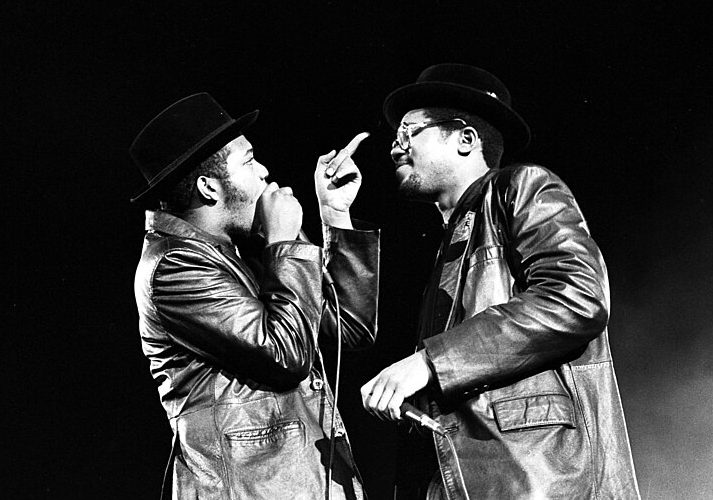
While there were earlier experiments, the undeniable “Big Bang” was the 1986 remake of Aerosmith’s “Walk This Way” by Run-DMC.
It wasn’t a collaboration born out of artistic longing—it was producer Rick Rubin’s idea to help Run-DMC cross over to a white audience. The production was simple by modern standards: a drum machine beat layered under Joe Perry’s riff, with Steven Tyler and the MCs trading lines. It broke down the literal wall between the genres in the music video and proved that the swagger of rock and the bravado of rap were cut from the same cloth.
The Thrash Era: Public Enemy and Anthrax (1991)
If Aerosmith opened the door, Anthrax and Public Enemy kicked it off its hinges.
“Bring the Noise” (1991) was heavier, faster, and more aggressive. This wasn’t radio rock; this was thrash metal meeting political hip-hop. The production challenge here was immense. Producers had to figure out how to make Chuck D’s booming baritone cut through Scott Ian’s jagged, distorted rhythm guitar.
This era birthed the “wall of sound” approach to rap-metal. It required aggressive compression and careful EQ carving to ensure the vocals didn’t get buried—a fundamental skill in heavy music production.
The 90s Explosion: The Rise of Nu Metal
By the late 90s, the collaboration had evolved into a full-blown subgenre: Nu Metal. Bands like Korn, Limp Bizkit, and Rage Against the Machine weren’t just featuring rappers; they were integrating hip-hop rhythms into the DNA of their sound.
This era changed music production forever. The drums got punchier, mimicking breakbeats, while guitars were down-tuned to drop-A or drop-B frequencies to occupy the sonic space usually reserved for synth bass. They discovered that recording down-tuned guitars presents a whole set of unique challenges that metal producers have since made a permanent part of their process
Production Insight:
Mixing Nu Metal is notoriously difficult. You have a vocalist alternating between whispering, rapping, and screaming, fighting against massive, distorted guitars. The producer has to automate volume rides meticulously to keep the vocal intelligible without losing the band’s power.
The Mainstream Peak: Linkin Park and Jay-Z (2004)
The commercial apex of the genre arrived with Collision Course. This wasn’t a mixtape; it was a re-recording where Linkin Park and Jay-Z mashed up their hits.
The track “Numb/Encore” won a Grammy, solidifying the genre’s place in history. The production was pristine, moving away from the gritty, garage sound of the 90s into a polished, radio-ready sheen. Mike Shinoda’s production fused live instrumentation with programmed samples seamlessly, proving that a laptop and a Les Paul could live in perfect harmony.
The Modern Era: Trap Metal and Beyond
Today, the line between rap and metal is almost invisible. Artists like Ghostemane, Scarlxrd, and City Morgue have birthed “Trap Metal” or “Scream Rap.”
In this modern iteration, the live drummer is often replaced or augmented by the Roland TR-808 kick drum. The distortion isn’t just on the guitars anymore; it’s on the 808s and the vocals, too.
The Technical Challenge:
The biggest hurdle in modern rap-metal is the low end. You have down-tuned 8-string guitars fighting for space with massive sub-bass 808s. To make this work, producers utilize advanced side-chain compression and dynamic EQ to duck the bass guitar (or 808) every time the kick drum hits.
Conclusion
From the novelty of the 80s to the technical precision of modern Trap Metal, the collaboration between rap and metal has proven to be more than a fad. It is a testament to the versatility of heavy music. Whether it’s a turntable scratch or a pinch harmonic, the goal remains the same: to create something loud, aggressive, and impossible to ignore.