
 Sy Shackleford
First off, Happy Holidays/Happy New Year. In my last annual review, I mused that hard times and social unrest are the parents of great music. With 2025 thankfully coming to an end, I’d like to share some of that great music with you all. Sure, you’re more than welcome to conduct The Big Lebowski and say, “Yeah, well, you know, that’s just, like, your opinion, man”, but you might find yourself digging some of these choices. And yes, I know that the biggest complaint about this write-up will be the exclusion of a certain far-going album. To that, I respond with two statements: “Eh, to each his own.” and “If I wanted to be hagiographic, I’d have included every ‘Legend Has It…’ album.” Without further ado, I present you with my top 10 hip-hop albums of 2025.
10.) Artist: billy woods
Album Title: Golliwog
Label: Backwoodz Studioz
Release Date: May 9th, 2025
Producers: Messiah Musik, The Alchemist, Conductor Williams, Ant, El-P, Steel Tipped Dove, et. al.
“This album cover looks disturbing as fuck” was at the top of my first thoughts about billy woods’ ninth album before I decided to buy it from Baltimore’s Sound Garden. Seeing a minstrel show caricature doll in the middle of the forest does elicit uncomfortable horror movie vibes with racist overtones. “Golliwog” is a horrorcore album replete with dark imagery, black humor, and Black horror/trauma. Though billy’s lyrics do sound awfully stream-of-consciousness, there is an underlying theme to the album. Using a “who’s who” of underground beatmakers, those producers have collectively created an immersive soundscape with music, unsettling ambience, and noise to elicit anxiety and fear. New York City-based producer Steel Tipped Dove laced the beat for the album opener “Jumpscare”, creating dissonance and distress as billy connects references from horror movies to racism with lines such as “The dead drift like empty boars / My people fled to the mountains, but it’s nowhere the White man won’t go.” On the Conductor Williams-produced “Star87”, Mr. Williams uses phone ringing samples, unnerving noises, and a very low-key bassline to match billy’s intense psychological dread brought about by his self-imposed isolation.
The guest features add more to the haunted atmosphere. Detroit’s Bruiser Wolf appears on the Sadhugold-helmed “Blk X-Mas”, painting the piano-looped beat with his unique and enthusiastic spoken word cadence. This stands in contrast with billy’s relaxed flow as both emcees equate their poverty-stricken upbringings as Black horror. “Corinthians” sounds like a Def Jux reunion as we get a verse from Despot and production from El-P. This beat by El-Producto has the avant-garde sounds of early 2000’s Def Jux: Purposely distorted analog sound and a heavy build-up. Next up is “Maquilladoras” with Massachusetts emcee al.divino. Saint Abdullah and Eomac add television white noise distortion and a slow sporadic piano key while both al’s and billy’s verses are slightly political in commentary, using amputation as a metaphor. His Armand Hammer partner Elucid appears on three tracks: The final two tracks, “Lead Paint Test” and “Dislocated”; and “All These Worlds Are Yours” before those two. The latter is mostly Elucid doing the lyrics and the production is off-kilter with unrhythmic drums and echoing voices. The former is the final single and Willie Green creates a traditional-sounding hip-hop beat with record scratching and boom-bap snares. As for “Dislocated”, the Human Error Club provides a jazz production as billy waxes lyrically about the psychological alienation he feels as a Black man.
Frequent billy woods producer The Alchemist brings his sound on “Counterclockwise” where the lyrics are literally the stuff of nightmares. “Golliwog” thrives on that uneasy closeness between fear and self-knowledge, using horror not as spectacle but as a lens. While billy’s flow is lackadaisical, his writing is dense without being impenetrable. Cryptic, yet sharply communicative. By the end of the album, it’s clear that woods isn’t hiding behind metaphor; he’s weaponizing it, asserting his presence as both narrator and specter. I’m coming back to “Dislocated” because it’s album’s most incisive track and it’s layered with psychosocial properties. Woods raps about the being severed from oneself as a survival response. The imagery billy uses is inspired by anti-colonial psychologist Frantz Fanon and grows increasingly suffocating: Bodies pinned, identities flattened, and existence reduced to absence. Throughout “Golliwog”, billy blurs the lines between autobiography and social commentary, insisting that history is neither abstract nor an interpretive discipline. It’s real and it is lived, carried, and endured. Trauma, memory, and resistance move in tandem, making “Golliwog” an album where ruminations on loss, exile, and return are disguised in horror metaphors to make a broader indictment of colonial and post-colonial violence toward Blacks.
9.) Artist: J.I.D.
Album Title: God Does Like Ugly
Label: Dreamville/Interscope Records
Release Date: August 8th, 2025
Producers: Boi-1da, Lex Luger, Christo, Jay Versace, et. al.
Black churches began in America’s southern states out of both necessity and independence. When Black Americans were forbidden from worshipping in mainstream (read “White”) churches, they formed their own. Dreamville rapper J.I.D. was raised in the Bible Belt (specifically Atlanta), which may have inspired the title of his fourth album “God Does Like Ugly”. One of the more versatile young rappers, J.I.D.is possessed of a pen and mic skill game that’s landed him features with elite emcees such as Eminem and label-head J. Cole. I’m glad a friend put me onto this album. I first listened to it this past summer on a train ride from Connecticut and the album was awfully worth the hype that I came across in posts/comments on social media platforms and hip-hop websites. Among the album’s guest features are Westside Gunn, The Clipse, Vince Staples, and (and this one’s a high school throwback for me) Pastor Troy. The first single, “WRK” was released this past spring. Its sonic canvas is a trap beat courtesy of Christo & Pluss, but with J.I.D.’s literate rhymes painted on it. They say the introductory track sets the tone for the whole album, and I usually concur with that sentiment. But for this album, “WRK” does exactly that. For me, “WRK” is where J.I.D. proves he has a multifaceted rhyming ability.
Take the song “Glory”, as an example. Over Lex Luger’s gospel-tinged beat, J.I.D. showcases his storytelling ability, providing a first-person narrative of criminal life inspired by his incarcerated older brother. The second single “On McAfee”, has the conventional attributes of southern hip-hop: Fast-paced flows over 808 snares and synths provided by Boi1da, Cubeat, and Vinylz. “Community” is one of the album’s later singles and consists of a moody soulfulness to the production. Lyrically, J.I.D. begins rapping with his voice filtered to sound deeper. But eight bars later, its back to his real voice, which he uses quite the intensity to describes his beginnings. Showing a reckless nothing-to-lose brashness, he raps “Lisan al Gaib, I see a tiny line of silver / A way to make a play, although they say it’s unfamiliar / It’s off the kilter, I say the words without a filter / You gotta have nerve, it’ll make you strong if it don’t kill ya”. The Clipse provides their raps, and of all three emcees, Malice gets the win for the best verse. Though King Push matches J.I.D.’s passion, it’s Malice who shines with well-placed wordplay and vividly showing how he’s a product of his environment. All three emcees emphasize this along with a message against glorifying and mythologizing where they came up.
Jay Versace makes use of a prog-rock guitar sample on “VCR”. Featuring Vince Staples, his verse actually coincides with the title when raps “See the movie’s not rewinding, my friend / We turn the VCRs to dinosaurs / The money we spend just leave us wanting more.” You can never go wrong with the “Paul Revere”-inspired reversed 808 drums. “What We On” makes use of such arrangements solely for the hook. Three tracks also worth mentioning are “Of Blue”, “Sk8”, “No Boo”. For the former, it begins with wistful guitar strums and airy vocals from Mereba for roughly nine seconds. After that, the tempo picks up with a looped blues guitar samples and medium-paced snares. J.I.D. raps stream-of-consciousness semi-autobiographical rhymes. It goes for over six minutes and shifts to a more atmospheric production which topically matches J.I.D’s raps. “Sk8”, has late ‘90s/early 2000’s southern rap written all over it, though having Ciara on the hook gives it certain polish. Along with rap duo EARTHGANG, all three emcees give a big-up to ATL with hometown references sprinkled evenly throughout the raps. “No Boo” is a conversation track with R&B inspired production. J.I.D. and guest artist Jessie Reyez do one verse in English and the next both in unison and in Spanish. All in all, “God Loves Ugly” is a soulful journey of a young emcee who brings his A-game.
8.) Artists: Freddie Gibbs x The Alchemist
Album Title: Alfredo 2
Label: ESGN/ALC Records
Release Date: July 25th, 2025
Producer: The Alchemist
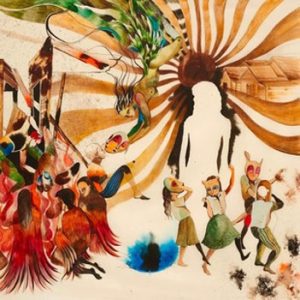
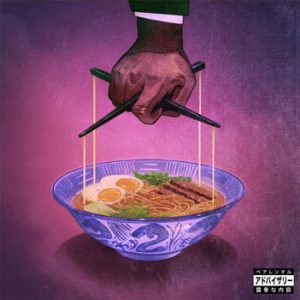
Come on, you know they had to do a sequel, right? The fans wanted it, and the way the raps meshed with the music warranted a sequel. Well, it’s here. Five years after releasing “Alfredo” to both critical acclaim and a Grammy nod, Gangsta Gibbs and the ever-productive Alchemist are back with more. “Alfredo 2” serves up more for in terms of tracks, production, and cinematic crime lyrics. There’s less of an American mafia influence on “Alfredo 2” and more of the Yakuza of Japan. Even the album cover reflects this as the customary “Parental Advisory” warning sticker is in Japanese lettering. The album does bear some parallels to its predecessor, though: The opening tracks on both albums are (superficially) ten years apart as “Alfredo” began with “1985” and its sequel begins with “1995”, perhaps a nod to the release year of Raekwon’s debut which popularized mafioso and organized crime themes in rap. “Alfredo 2” is viscerally cinematic, as is shown lyrically and musically. Freddie’s never been afraid to play the part of both the thug and drug lord who have even lesser fear of getting their hands dirty. But here, he shows the different facets of the drug czar, the lavish lifestyle and the paranoia going hand-in-hand with it. On “Mar-A-Lago”, an obvious reference to Donald Trump, Gibbs fears a similar federal raid on his property.
With fourteen tracks, there’s a dearth of guest rappers on “Alfredo 2”. However, the three rappers who were permitted guest spots serve their purpose well. Anderson .Paak appears on “Ensalada” where Alchemist laces a looped piano sample; frequent Alchemist collaborator Larry June lends a syrupy drawl on “Feeling”, which has an atmospheric jazz number for its sonic backdrop; and the lush, head-nodding “Gold Feet” features Dreamville’s JID. Outside of his crime don persona, Freddie shows his cynicism with the rap game on “Jean Claude”, even referencing the title actor’s film “Bloodsport”. “I Still Love H.E.R.” is a take on the fabled “I Used to Love H.E.R.” by Common. Though Alchemist provides a slowed, soulful and psychedelic loop, the identity of the “her” in the song see-saws between the drug game and the rap game. Freddie’s verses on “Shangri-La” should be shown in “How to Rap” videos as masterclasses on flow and breath control. “Skinny Suge II” has Freddie channeling the living spirit of Ice-T over Alchemist’s film noir-ish production. With the original “Alfredo” and his 2014 Madlib collaboration “Piñata”, Freddie had the persona of master low-down hustler on the come-up. With “Alfredo 2”, he’s transcended that variant of himself and ascended to the world of Japanese crime.
Though drawing understandable comparisons to the Clipse album released two weeks prior, the two acts are different kinds of coke rhymers. As “Alfredo 2” demonstrates, Freddie has a grit to his lyrics and choice of production. The heavily mentioned cinematic sound of the album was translated to the screen as well with the short film that came with it. Glimpses of said film are shown in the music video for “1995”, which has a notable production shift expertly pulled off by Alchemist. As a producer, he’s managed to stay busy overseeing the entirety of several albums, including his own, for more than a decade. When he works with artists producing their full albums, he must either craft beats with the artists’ input or have some intuitive sense of what to pull from his vault of unused beats. It tends to work best with rappers in Freddie’s niche. In my full review, I made mention of what I call the album’s ‘narcotic swagger’. The sound of “Gas Station Sushi” screams of it. With an R&B groove to the production, Freddie incorporates 2025 events, but is largely apathetic to them as it pertains to his grind. Said grind is expounded upon on the guitar-looping “Lavish Habits”, which mixes crime and sports references. If anyone questions the standing of “Alfredo 2”, Freddie reminds naysayers that he “put more niggas on this field than Jerry Jones”.
7.) Artists: Mobb Deep
Album Title: Infinite
Label: Mass Appeal Records
Release Date: October 10th, 2025
Producers: Havoc, The Alchemist
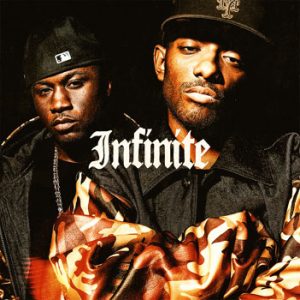
Because of “The Infamous”, Mobb Deep are quite “Infinite”. The Queens duo of Havoc and Prodigy and their legacy will be forever tied to their landmark sophomore album from 1995. They represented a new breed of east coast hip-hop: Dark, angry, but infectious and influential. It was as though the themes of Seattle’s grunge rock scene made their way into rap. Though Prodigy’s lines have been more quoted and sampled, Havoc has always been more praised for his production, able to turn obscure and upbeat samples into bleak urban soundscapes. The duo released eight albums before Prodigy’s death in 2017. Also, the Alchemist established himself as a producer through Mobb Deep, having crafted beats for both their group and solo efforts. It was from him earlier in the year that there would be a posthumous ninth Mobb Deep in the works. That same album was included in the line-up for Mass Appeal’s “Legend Has It…” marketing campaign. In an age where older rappers (notably Beanie Sigel) make use of A.I. to give strength once powerful vocals, one would expect that to be done with pre-recorded Prodigy verses. Both Havoc and Alchemist stated that this wasn’t the case, and that’s good. The verses used for “Infinite” weren’t recycled either, they were just unused, but given purpose.
Released in October, “Infinite” was the fourth and the strongest Mass Appeal/Legend Has It album distributed at that point. I hadn’t given up on them, but Mobb Deep (even now semi-posthumous) haven’t sounded this strong since the early 2000s. One thing about using old verses is that they run the risk of becoming anachronistic if not used soon enough. Prodigy’s been dead for eight years now, but “Infinite” still maintains a contemporary sound. Though Alchemist and Havoc share production duties, it’s actually Havoc’s show musically as the former laced only four of the fifteen tracks. Alchemist’s production highlight is the album’s second single “Taj Mahal”, which makes use of high-pitched multitracked vocals with a sped-up background sample. Lyrically, it’s hardcore Mobb Deep: Burners, street beefs, boasts and brags. The latter is manifested in the lyrics via casino references which are heavily displayed in the A.I.-produced music video. “Against the World” is the album’s first single, having been released in early September. Produced by Havoc, it serves as the album’s introductory track with jazz horns accentuating the backdrop, braggadocious rhymes from the Mobb, and some particularly hostile rebukes from Prodigy.
The last two album singles are Havoc-produced collaborative efforts. “Look At Me” might as well be considered a four-man posse cut as it features the Clipse. The VA duo have had a banner year, and King Push’s verse begins with a line that’s a biting indictment on the current state of hip-hop while also giving Prodigy his flowers: “I’d rather rhyme with your spirit than these other niggas.” The final single is my favorite track on the album. “Down For You” has an upstaging verse from Nas, but it’s the emotional urgency of the beat that bears the most attention. Havoc manipulates the main theme of the Vietnam War film Platoon, chopping and speeding up its violins to evoke the song’s theme of devotion. The album does have its ominous moments, even for a rap duo renown for dark raps. On the Alchemist-produced “Gunfire”, there’s a menace to the beat that includes gunshot sounds and Prodigy on the hook with a Jamaican inflection to it. Also, “Look At Me” isn’t the only four-man track. Fellow labelmates Raekwon and Ghostface Killah make an appearance and the low-key soulful “Clear Black Nights” with the latter utterly going in. Even if another Mobb Deep album is never made again, “Infinite” shows that the duo will live forever.
6.) Artist: Evidence
Album Title: Unlearning Vol. 2
Label: Rhymesayers Entertainment
Release Date: August 15th, 2025
Producers: Evidence, The Alchemist, Sebb Bash, Conductor Williams, C-Lance, Q-Three, et. al.
Say what you want about how Evidence always sounds the same with his monotone delivery that’s earned him the self-christened title of “Mr. Slow Flow”. But since 2007, the Dilated Peoples emcee has a knack for releasing good albums with subtle lyrical gems and stellar production. With “Unlearning Vol. 2”, Evidence delivers one of 2025’s most compelling exercises in restraint and craft, earning its spot among the year’s standout hip-hop albums. Building on the reflective philosophy he outlined with the first Unlearning project, Evidence continues to strip his music down to the essentials: Tight, sub-four-minute tracks with minimal hooks, and a laser focus on the lyricism and flow that have long defined his career. The result is an album just shy of thirty-seven minutes that feels deliberate and unhurried in an era of bloated runtimes and gimmickry. From the Sebb Bash-produced opener “Plans Change” to the contemplative Q-Three-produced closer “Dutch Angle,” “Unlearning Vol. 2” doubles down on its creator’s core strengths: Introspective bars delivered with a calm, head-nodding cadence over rich, jazz-inflected and boom-bap influenced soundscapes. Guest spots from the likes of Larry June and Blu add texture without distracting from Evidence’s center-stage presence, and his self-produced cuts show that even when he hands over beats, his artistic vision remains cohesive and clear.
The strongest moments on “Unlearning Vol. 2” are the tracks where Evidence fully commits to the album’s guiding philosophy of restraint and clarity. “Plans Change” set the tone immediately, pairing understated production with reflective bars that feel lived-in rather than performative. Cuts such as “Seeing Double” thrive on Ev’s ability to say more by saying less, relying on steady cadence and carefully chosen words instead of vocal theatrics or flashy structure. These tracks exemplify what the Unlearning series does best: Trust the listener, let the beat breathe, and allow the verses to reveal their weight over time rather than demanding instant gratification. “Rain Every Season” is another standout which harks back to the weather theme of his first three albums. Produced by The Alchemist and featuring a verse from him, the Stepbrothers are back like they never left. That said, not every track landed with the same impact. A few songs blend together in a way that makes them feel more functional than memorable, especially for listeners looking for distinct peaks or standout hooks. While none of these moments are outright missteps, they can feel slightly interchangeable within such a tightly controlled runtime. Even so, those minor lulls don’t derail the project; they simply highlight how committed “Unlearning Vol. 2” is to consistency over spectacle.
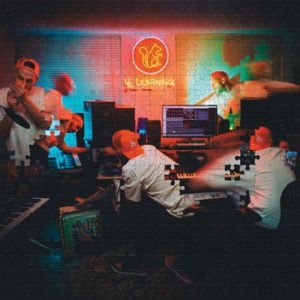
What makes this album particularly notable in 2025 is how it encapsulates a seasoned artist actively deconstructing his own instincts rather than resorting to nostalgia or safe bets, the album’s puzzle piece cover reflects this. Evidence’s approach here and for his previous albums is neither flashy nor is it driven by trend. Instead, it’s a continual refinement of voice and purpose. Lines like those on “Seeing Double,” where he stakes a claim to authenticity over approval, and the understated but steady momentum throughout the tracklist, underscore a veteran rapper still pushing himself to do more with the little he works with. While “Unlearning Vol. 2” may not boast the immediate catchiness of some of its peers, its consistency, lyrical maturity, and thoughtful sequencing make it a record worth revisiting, especially for listeners who value hip-hop that rewards attention and time. In a year rich with bold statements and sonic experimentation, Evidence’s latest stands out for its quiet confidence and dedication to craft, solidifying it as a must-include on this or any top hip-hop albums list of 2025.
5.) Artist: Oh No
Album Title: Nodega
Label: Nature Sounds
Release Date: November 14th, 2025
Producer: Oh No
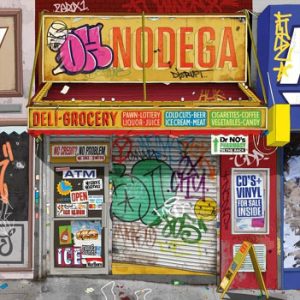
“Nodega” by emcee/producer Oh No is pretty much a concept album. Fully producing the project, Oh centers it on a day in the life of a fictional corner store. Every urban city has one: It’s a hybrid convenience store, deli, and grocery store; and they’re called “bodegas”. Dr. No’s named his “Nodega”, and it includes humor-filled skits and songs from the rappers who happen to come in. Despite Oh No’s Los Angeles area upbringing, his production on here sounds surprisingly east coast boom-bapish. Though he sometimes works with his older brother, Madlib, as the Professionals, “Nodega” isn’t a family affair. Even though Madlib is often cited to be the better producer, Oh No can hold his own behind the boards and over a mic. After the “Broken Radio” intro sets the tone, “Nodega” kicks off in gritty fashion with “No One’s Stop”, where Oh attacks a raw beat while plotting hustler ambitions. “Community Trenches” follows with Roc C., Blu, Kazi, and M.E.D. urging caution and survival amid outside chaos, while Rah Digga and Talib Kweli trade razor-sharp bars on “Around Here”, making it clear that access isn’t universal. The second and final single, “Rooftop Shottas”, pairs Ghostface Killah with TriState over a menacing backdrop, delivering classic stickup talk with lethal determination.
Sands delivers the awfully short, but detailed “Nodega Run”, making use of vintage drums to underscore street-level storytelling with references to WandaVision, MF DOOM, as well as Desus & Mero. This leads into the album’s first single, “Money Everyday”, where Big Twins and Tha God Fahim spit raps about the constant, never-ending pursuit of that paper. Big Twins has a monstrous cadence to his rhymes while Fahim delivers his verse without theatrics, but a sense of urgency. After the “Dr. Nodega Informercial” skit, “Gutter Streams” reunites Oh No with The Alchemist as Gangrene, revisiting grimy, record needle-breaking imagery with unapologetic edge. The album continues its momentum with “Grounding Stars,” where Guilty Simpson, Montage One, and Vic Spencer unload threats over an airy beat with hard organic-sounding drums. New Jersey emcee CRIMEAPPLE later delivers his brand of cinematic east coast grit on “How Crime Works,” detailing his grind between a pair of atmospheric interludes. Some more unexpected customers come through “Nodega” during its second half. Gaithersburg, Maryland’s own Logic enters on “No Parking Zone” and calls out posturing frauds and making it clear that he wants all the smoke: “The one stop could be your last stop / It only makes logical sense when the cash drops.”
Esoteric makes an appearance on “Czarnobyl Torture” and sharpens the battle-rap edge with scathing intent. Between him and Dr. No, this beat sounds better suited for the latter than Esso. For the album’s last fifth, the “Good Beer Therapy” skit leads to Tash and Wildchild reaffirming their Likwit Crew loyalty on “Likwit Smoke”. The remainder includes “ICU with Bottle Service” where Khrysis, Bishop Lamont, and Oh No trade bars over an arcade video game sample before “Corner Goons” wraps things up with Roc C. and Jayo Felony issuing final street directives. By the time “Nodega” reaches its closing moments, the concept is fully realized: The neighborhood corner store where top-tier lyricists cycle in and out, each stopping by long enough to unload a sharp, memorable street tale before passing the mic along. Every guest fits naturally within the bodega framework – they all show up, deliver a standout verse, and exit before wearing out their welcome. That sense of discipline keeps the album moving at a steady pace, giving it the feel of an ongoing conversation rather than a loose compilation of features. Oh No’s expansive, cinematic production ties it all together, standing tall among the strongest underground hip-hop beats in recent memory. The album flows smoothly from start to finish, maintaining a high standard throughout.
4.) Artists: Rakim x Big Ghost LTD.
Album Title: The Re-Up
Label: Holy Toledo/Compound Interest
Release Date: August 29th, 2025
Producer: Big Ghost LTD.
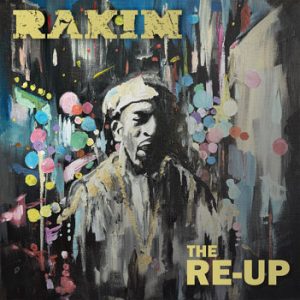
Apparently, Rakim’s EP album from 2024 (“G.O.D.’s Network (Reb7rth)”) was supposed to be an appetizer to the God emcee’s full-length album. He hasn’t released a full LP since 2009’s “The Seventh Seal”, and “G.O.D.’s Network (Reb7rth)” was a seven-track EP entirely produced by Rakim himself. Not only that, each track was a posse cut. Though the guest appearances were stellar (Kool G. Rap, Joell Ortiz, Method Man, and even B.G.), Rakim enlisted so many rappers that it’s as though he’s making cameos on his own project. After several listens, I wasn’t feeling much of the production and concluded that Rakim may have taken the adage of “with a little help from my friends” way too far. On some of the songs, he reduced himself to doing just the hook. I thought of the EP in terms of how I initially thought of 2016’s “Captain America: Civil War”: An Avengers movie with a Captain America overlay. Enter Big Ghost LTD. He’s been surprising everyone with his production skills, which is understandable considering he began as online hip-hop blogger with hidden talents. He used those talents to take Rakim’s EP and make a whole new appetizer out of it, with plenty of the fat trimmed, and some new ingredients as well. Though essentially a remix album, the Big Ghost’s production, the excised feature verses, and the addition of two new tracks make “The Re-Up” hella better than its template.
The album begins with “Be Ill”, which consists of a piano loop and record scratching. It’s like Big Ghost is channeling the DJ Premier of yesteryears. As for the features, Masta Killa and Kurupt have been replaced with Eddie Kaine and RIM. Lyrically, Rakim is just as limited in terms of verses as the original. But nonetheless, his verses on this album build on the skills that continuously make him one of the most studied rappers of all time: Conversational flow, internal multisyllable rhyme schemes, and literate imagery. “Now Is The Time” has dusty drums, bell samples, and hi-hat rhythms. It also drops both B.G. and the Compton Menace, leaving only Hus Kingpin as the guest rapper. Built from a blues sample, “Love Is The Message” originally included King Louis and a posthumous verse from the late Nipsey Hussle. On this remix, Sally Green still sings the hook, but Nipsey and Louis are removed. Ras Kass and Planet Asia still have their verses intact and the track sounds better with this beat and with less emcees. The remix to “God’s Playground” removes the posthumous verses from both DMX and Fred the Godson. Rakim is on the hook while 38 Spesh and Skyzoo handle the heavy load. Between him and Spesh, Skyzoo rides the vintage soulful beat more steadily, and the production is reminiscent of his album with Apollo Brown.
The next two tracks keep all of the guest emcees included on the original versions. “Pendulum”, originally titled “Pendulum Swing”, is pure head-nodding boom-bap. Once more, Rakim is on the hook, but he’s brought quite the team with him: KXNG Crooked, L.A. the Darkman, Canibus, and Chino XL. The latter died a month prior to the original album’s release, so his verse resonates more, and it was right to have him go last with his verse: His is the longest and his iconoclastic wordplay is delivered in a rapid-fire pace. “International” features Kool G. Rap, TriState, and Joell Ortiz over a vintage R&B sample. Though G. Rap is the most revered guest star on this track, it’s Joell who steals the show with a pen game that keeps getting better as time goes on. “Sign of the 7even” begins with a Prodigy verse which goes quite well with the stripped production. Method Man’s featured as well, and Johnny Blaze continues to find ways to compose verses sans profanity and still come off dope. The final two tracks are exclusives: “Not to Be Defined” contains both a hook and verse from Detroit-based emcee Lazarus while “I’m Good” is a solo Rakim track. “The Re-Up” may be a spiced-up variation of a preview album. But if it’s any indication of what to expect from Rakim Allah in the future, then I hope Big Ghost LTD. is once more behind the boards for its entirety.
3.) Artists: Apollo Brown x Ty Farris
Album Title: Run Toward The Monster
Label: Escapism Recordings
Release Date: November 14th, 2025
Producer: Apollo Brown
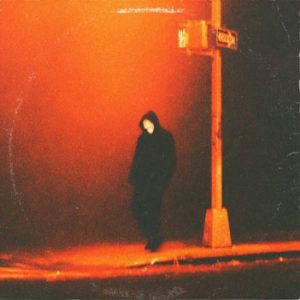
For more than a decade, I’ve gotten used to seeing Mello Music Group behind an Apollo Brown release. From his instrumental albums to his collaborative and compilation albums, MMG’s rubber stamp was ever present. Earlier this year, though, Mr. Brown parted ways with MMG and ventured out on by his lonesome, launching his Escapism Recordings as his own record label. Moving towards being more independent and having more control over one’s releases can be a scary step. Which makes it fitting that his joint album with fellow Detroit hip-hop artist Ty Farris is titled “Run Toward The Monster”. Corresponding with the title, Ty Farris raps with great confidence and assurance in his abilities as an emcee and lyricist. As with most of Mr. Brown’s collaborative albums, “Run Toward The Monster” begins with a vocal sample from a movie or a live speech that drives the theme of the album home. Here, it’s a man encouraging a crowd to face their fears. The album cover appears to be an out-of-focus image of a lit, but shady figure standing underneath a street sign. Ty Farris has appeared on several Apollo Brown releases prior, the most recent before now was 2019’s “Sincerely, Detroit”. But for a full-length album? Given Mr. Farris’ pen game and Mr. Brown’s sample-flip game, I hope another one is in-store because this album truly delivers.
Full disclosure, the decision to include this album in my annual top 10 write-up presented itself with some difficulty for me. Between it and the one Apollo released this past summer with Bronze Nazareth (“Funeral for a Dream”), both reached similar heights. But one track from Mr. Farris won me over. Creativity and wit in hip-hop are right up my alley, and Ty Farris channeled his inner GZA to make use of extended metaphors on “Ctrl Alt Delete”. Apollo provides a looped psychedelic groove with deep bass in the snares and kickdrums, and Ty uses computer terminology wordplay (56K modems, harddrives, copy & paste, firewalls, formats, etc.) to mirror the ruthless, survival-of-the-fittest dynamics of street life. Both Ty’s flow and cadence are reminiscent of Brooklyn rapper Skyzoo, but the former has a tighter focus. Speaking of which, on the flute sample-driven “No Celebrations”, he makes it clear that despite success, he has no time to revel in it. For guests, Ty enlists only two rappers: Mickey Diamond on “Authenticity” and Top Hooter on “Flawless Victory”. While “Authenticity” is more braggadocious, “Flawless Victory” has a low-key moody production with several gems “The humble warrior that’s brave never gets the praise / He lives with pain and only gets flowers when he’s in his grave.”
It’s clear that Ty Farris specializes in concept tracks. He’s got the vocabulary to formulate polysyllabic rhymes and the right amount of literate thought to support that specialty. On “Traffic”, he manipulates movement synonyms to weave intricate rhymes about street deals and his long-term goals. Ty’s also no stranger to opening up his psyche’s emotional mosaic. As he puts it on “Beautiful Struggle”, he “lets open a few scabs and let the blood drip in the pen”: He raps about being born in the Reagan era to drug-addicted parents only to grow up to idolize drug dealers, ironically. Nonetheless, he escaped that trap and followed his own journey. On “Sacred”, he raps drug bars that may give some of the more prominent coke rhymers (*ahem* Clipse, Griselda) a run for their money: “Every album is like tasting wine / that’s forty years old with soul, I stay refined / A credit card with a eighth of cocaine – I create the lines”. Some tracks of have themes going back-to-back. The murky “Cold Is The Gun” is a loose first-person narrative about the life and choices that come with street dealings. For the hook, Apollo makes use of a female vocal sample emphasizing survival when the night is young. On the string heavy and drumless “Street Patriots”, Ty speaks to street soldiers as a street soldier, about being brave and dangerous: Two requirements needed to “Run Toward the Monster”.
2.)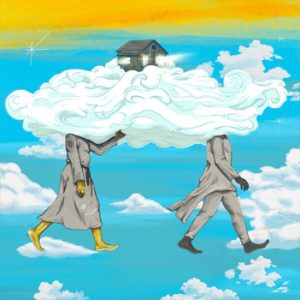 Artists: De La Soul
Album Title: Cabin in The Sky
Label: Mass Appeal Records
Release Date: November 21st, 2025
Producers: DJ Premier, Supa Dave West, De La Soul,
Pete Rock, Nottz, Jake One, et. al.
It’s appropriate that this album begins with a skit. Led by actor Giancarlo Esposito, “Cabin In The Sky” starts with a roll call of all of the album’s contributors (producers, guest artists, and the main artists). But when Mr. Esposito reached De La Soul themselves, one of them was absent. David Jude Jolicoeur (aka Trugoy the Dove, Plug Two, or simply Dave) died on Super Bowl Sunday in 2023. Dave was a major part of what made De La Soul an innovative alternative in hip-hop: They’re everyday men bursting with creativity. So why did I begin with “It’s appropriate that this album begins with a skit”? Because De La Soul were behind the concept of skit tracks, they invented the skit. Posdnuos stated on their 2004 single “Rock Co.Kane Flow” that they were the “First to do a lot of things in the game, but the last to say it”. He’s right, as the advent of De La Soul made it cool in hip-hop to think outside the box. Which brings us to their ninth album since 2016’s “…and the Anonymous Nobody”. This also marks their first album without Dave. The album’s intro marks the void of his presence, and is now Maseo and Pos, with the latter taking over most of the rapping duties.
Though their former producer Prince Paul was rumored to be working with De La again, that didn’t come to fruition. Like Mobb Deep’s 2025 album, “Cabin In The Sky” is semi posthumous, featuring numerous previously unused and unreleased recordings from the late Dave. Album’s first official song, “Yuhdontstop” not only has Dave’s words, but also his production. Even so, especially for die-hard De La Soul fans, Dave’s loss is felt. Production has always been a staple for De La Soul and their eclectic sampling from their debut was an entry point for many hip-hop fans. For “Cabin In The Sky”, the featured producers bring their A-Game. DJ Premier, who produced three tracks and has a trademark sound, begins with that on “Sunny Storms”, but flips it halfway through to a beat that had me thinking, “Dope! And this is still Premo?” Dave’s verse begins the Supa Dave West-helmed “Good Health” containing the bars “The biz keeps old niggas fit likе Jacqueline / Buffoons in my era cannot jack thе lane”. Maseo lends his vocals to the playful “Will Be” which leads into the jump-off lead single “The Package”. This is a feel-good track with Pete Rock providing a jubilant beat with verses Pos and Dave. It’s a reminder for fans of just how much a new De La Soul album was like a fresh air in hip-hop.
Jake One, who blessed De La twenty-one years ago with the aforementioned “Rock Co.Kane Flow”, returns here with “Patty Cake”. The beat, co-produced by Sam Wish, is psychedelic, head-nodding hip-hop with Dave and Pos flipping the title’s nursery rhyme between two verses. Nottz produces the soulful mother ode “A Quick 16 For Mama” and features a killer verse from Killer Mike himself. “Just How It Is (Sometimes)” is a storytelling track featuring professional imitator Jay Pharoah. Within, Pos spins a yarn about a woman with a cheating beau and a hilarious ending. Dave and Pos share production on the Bananarama-sampling “Cruel Summer Bring Fire Life!” and then show off their sampling palette by melding a Roy Ayers sample in there too. DJ Premier’s production reappears on “EN EFF”, providing a jazzy backdrop for Pos and guest emcee Black Thought to spit at least thirty-two bars each, and neither emcee wastes a line. The group also enlists Slick Rick and Common on “Yours”, produced by Pete Rock with a heavy “Hey Young World” influence. The album began with Dave’s absence, but he’s found in the Cabin alone on the album closer “Don’t Push Me”, with his production and off-kilter humor sprinkled into the song “Cabin In The Sky” is the penultimate album in Mass Appeal’s “Legend Has It…” promotion and is somewhere in my top three of those releases. Mr. Esposito speaks for all fans with the album’s coda: “Thank you, Dave.”
1.)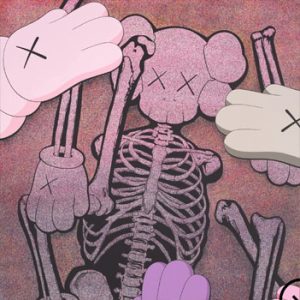 Artists: The Clipse
Album Title: Let God Sort Em Out
Label: n/a
Release Date: July 11th, 2025
Producer: Pharrell Williams
It’s been 16 years since “Til the Casket Drops” was released, the third and then-considered final album by the Clipse. The Virginia Beach duo then went their separate ways. Malice (born Gene Thornton) had a “road-to-Damascus” moment, experiencing an awakening which led to both a conversion to Christianity and his rechristening as “No Malice”. But Pusha T? He didn’t follow in his big brother’s footsteps. True to his rap nom-de-guerre, Terrence Thornton pushed forward, parlaying the sharp wordplay-laden coke rhymes that made the Clipse rap darlings into a successful solo career. The brothers later reunited in 2019 with a confirmed album in the making. Major label woes, deaths in the family, and circumstances beyond their control brought the brothers back together in full force. Despite his religious transformation, the elder brother of the Clipse has embraced his dichotomy and once more reverted to “Malice”. With “Let God Sort Em Out”, Pusha T and Malice have left no stone unturned. Their fourth outing is indicative of three things: They haven’t lost their chemistry. They’ve released their best album since 2006’s “Hell Hath No Fury”. They released the strongest hip-hop album of 2025, period.
Though usually backed by the soundscapes provided by the Neptunes, Pharrell Williams is all that remains of the once touted production duo. Nonetheless, Mr. Williams handles the production duties expertly, crafting the right sonic canvasses that are palatable for both the Clipse’s introspective lyrics and unabashed drug baron raps. The lead single “Ace Trumpets” begins with a vocal sample deeming it “culturally inappropriate” before the Gamelan-influenced beat drops. For the raps, the Clipse weave lyrics densely-packed with brand fashion and pop culture references as metaphors for the spoils yielded by their illicit dealings. The opening track has the duo at their most vulnerable. “The Birds Don’t Sing” features John Legend’s soulful vocals and piano keys as Malice and Pusha exorcise their demons concerning their parents’ deaths. In Malice’s verse, he raps his pain and then juxtaposes it with his father’s: “See, mine made sure he had every base covered / So imagine his pain findin’ base in the cupboard.” What also adds to the strength of “Let God Sort Em Out” is that it has no major or independent label backing. It’s entirely self-released, giving the Clipse carte blanche to put out what they please and how they please.
Other album highlights include one of its earliest spawns: “Chains & Whips” was released in 2023 and the production is reminiscent of Jay-Z and Kanye West’s 2011 track “No Church in the Wild”. In something of a play from that idea, Kendrick Lamar’s guest verse includes the line “Let’s be clear, hip-hop died again / Half of my profits may go to Rakim.” The opening on “M.T.B.T.T.F” is a standout as it begins with a hard a capella verse from King Push for more than 20 seconds before the beat drops, and that anticipation just makes the production have a greater impact. The track’s title is an acronym for “Mike Tyson Blow To The Face” which goes to show that the Clipse are never in shortage in all the ways they can talk about that white powder. The myriad of metaphors that they serve up reminds me of a line (no pun intended) from the 2001 film Blow: “Cocaine buffet”. Other guest rappers include Stove God Cooks helming the hook on “F.I.C.O.” and Nas on the penultimate track “Let God Sort Em Out/Chandeliers”, marking the first collaboration between the Clipse and the poet laureate of Queens who’s had quite a year for himself with guest features on many high-profile releases. Though Mass Appeal had hip-hop in a tidal wave for 2025 by marketing a bevy of albums from seminal artists, the Clipse’s “Let God Sort ‘Em Out” didn’t let itself get drowned and stood its ground against the rising of the tide.